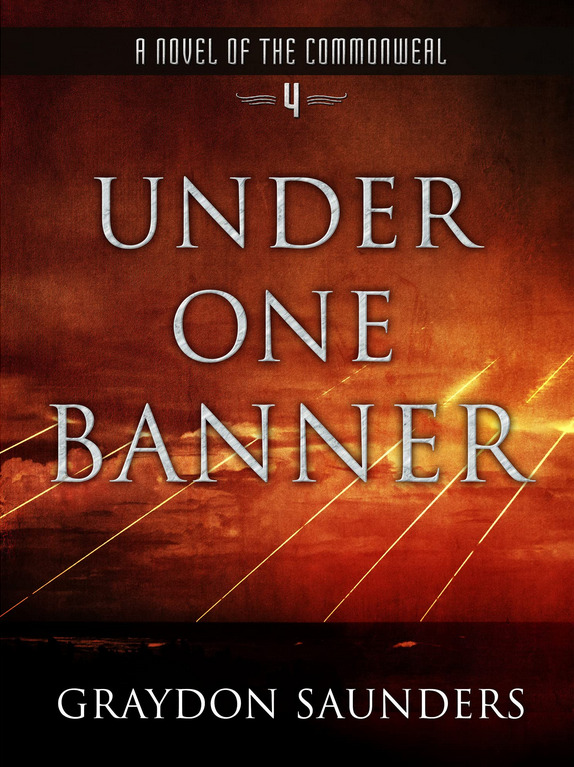
The series started dropping off for me a bit here: I didn’t find the protagonist compelling, and her recovery from an active magic user to a military adviser only as interesting as the world it exposed. But the focus on military matters didn’t interest me for the most part, so I focused on the implicit bits of civilian worldbuilding (I loved those, to compensate).
For example: Necromancers are highly useful, since they can sterilize large amounts of matter, particularly water. Or: to argue complicated cases, 15 judges split in teams of 5 judges, and everybody argues for the view they least support. Also: more gender worldbuilding, in that some human races construct their gender based on the concepts of “creative” and “supportive”. The whole gender and pronoun thing gets some more explanation, as does the “races of humans living together”, which is very neat: It was mostly ignored before, but clearly there looking back. Proves careful thought on Saunders’ part (though nobody can claim he doesn’t overthink things, to be fair).
Oh, and the language, of course. Military slang is even better than civil servant slang, in this world, and “comprehensive alteration of terrain contour” was particularly nice.
Quotes
Excellence requires risk.
Related books Books related to the whole series are linked at the first part of the series.
The March North
by Graydon Saunders · published 2014 · last read 2021-05-16Safely You Deliver
by Graydon Saunders · published 2016 · read 2021-05-20A Mist of Grit and Splinters
by Graydon Saunders · published 2020 · read 2021-06-08